
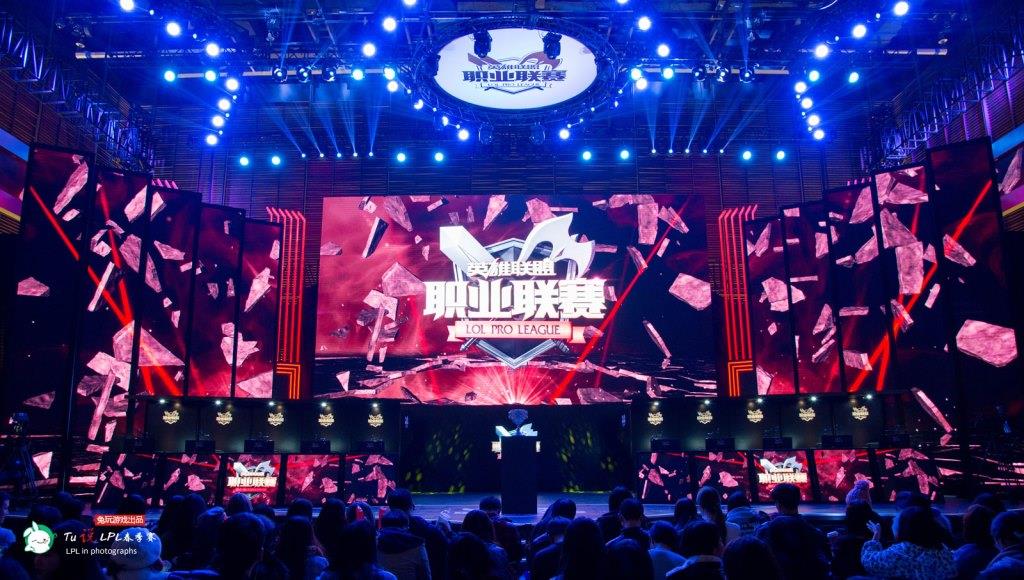
The Chinese e-sports sector has transitioned from a rapidly growing market into a fully mature global powerhouse. In recent years, China’s e-sports industry recorded massive profits, solidifying its place as the largest and fastest-growing e-sports market globally (He et al., 2025; Wong & Meng-Lewis, 2023).
No longer a peripheral market, China accounts for 24.8% of all global game revenues from consumer spending, outpacing other major regional territories (Newzoo, 2022).
Driving the Market: The Power of Livestreaming
The composition of China’s e-sports revenue highlights a stark evolution in how the industry monetizes. Rather than relying solely on traditional ticket sales or local sponsorships, the current market is overwhelmingly driven by content creator ecosystems, virtual gifting, and digital media.
- Livestreaming Dominance: Livestreaming and e-sports broadcasting remain the undisputed primary sources of revenue, capturing the vast majority of the industry’s total market share.
- Platform Demographics: Driven by big tech infrastructure, mobile e-sports completely dominate the market, followed by PC-based e-sports and hybrid titles. China explicitly leads the world in mobile gaming via integrated ecosystems (Atlantis Press, 2024).
- Genre Breakdown: Multiplayer Online Battle Arenas (MOBAs) and tactical shooter genres lead the charge, generating the bulk of competitive gaming revenue.
A Massive, Dedicated Global Audience
China’s e-sports user base has expanded to a staggering 495 million active users. This colossal audience means that China commands a massive portion of the estimated global e-sports audience.
| Metric | Industry Statistics |
| Chinese E-Sports User Base | 495 million users |
| Asia-Pacific Global Audience Share | Over 57% of total global viewers (Shewale, 2024) |
| Global E-Sports Market Projections | Expected to reach ~US$5.43 billion by 2027 (Trenker, 2024) |
The engagement within this user base has also shifted. While live streams are favored for major tournament matches, short social clips on local platforms drive the majority of daily content discovery, player storylines, and community memes.
From Niche Hobby to Massive Economic Engine
The e-sports industry is now deeply integrated into China’s national digital economy and urban frameworks. State-endorsed policy has deliberately reframed e-sports from a stigmatized youth subculture into a cornerstone of China’s modernization agenda and high-tech industry (Taylor & Francis, 2026).
The infrastructure has become highly localized:
- The Town Initiatives: Following regional initiatives to cultivate “characteristic towns,” several dedicated e-sports hubs have been established across provinces like Chongqing (Li et al., 2025).
- Hub Cities: Operations are heavily concentrated in first-tier cities, with Shanghai serving as a premier world-renowned e-sports city alongside global hubs like Los Angeles and Seoul (Atlantis Press, 2025).
- Offline Revival: Mega-tournaments held entirely offline are acting as economic catalysts, merging top-tier gaming with local cultural tourism and filling stadium seats at record-breaking speeds.
Global Expansion: Going Beyond Borders
One of the defining characteristics of the current e-sports era in China is its massive international footprint. Top-tier Chinese e-sports publishers and leagues have aggressively expanded into Southeast Asia, the Middle East, and Latin America (Atlantis Press, 2024).
By leveraging popular mobile games like Mobile Legends: Bang Bang (MLBB) and Honor of Kings, China is strategically utilizing e-sports as a tool for cultural diplomacy and soft power, effectively facilitating cultural exchange with massive international audiences (Xiang & Yuan, 2025; ISEAS, 2025).
References
Atlantis Press. (2024). United States – China Competition in Creating New Markets in The Global E-Sports Industry. Proceedings of the International Conference on Digital Economy and Competitiveness.
Atlantis Press. (2025). The Impact of e-Sports Tournaments on Regional Economy: An Empirical Analysis on the Example of Perfect World Shanghai Major 2024. Proceedings of Regional Economic Developments.
He, X., et al. (2025). Corporate social responsibility framework in esports: evidence from China. Sport in Society, 28(2). https://doi.org/10.1080/17430437.2025.2594020
Cited by: 1
ISEAS – Yusof Ishak Institute. (2025). Is Mobile Legends: Bang Bang Indirectly Deepening Chinese Soft Power in Southeast Asia? ISEAS Perspective, 2025(16).
Taylor & Francis. (2026). The developmental–moral discourse of Digital Modernity: a corpus-assisted analysis of eSports in Chinese English-language news. Cogent Social Sciences, 12(1). https://doi.org/10.1080/23311886.2026.2645757
Trenker, J. (2024). Esports: market data & analysis. Statista.